Strategic Audience Analysis
Since the global COVID-19 pandemic shut down nearly all walks of life in 2020, more people have relied on social media not only to stay in contact with those closest to them, but also as a source of information. Some brands took advantage of this unusual reality by using social media to build their brands and attract new consumers. Dunkin' Donuts was the first of the major coffee retailers to embrace social media during the pandemic, and as a result, created a dominant web presence that rivals even global conglomerates like Starbucks. This blog will examine Dunkin’s social media presence, and identify a target audience from that information.
According to information obtained through Sparktoro, around 51 percent of men make up the bulk of millennial and Gen-Z coffee drinkers, nearly an even split. Customers between the ages of 26 and 35 make up the widest margin, with nearly 41% purchasing coffee products. Even though TikTok ranks fifth in usage among these customers, it is well above the national average. Millennial and Gen-Z customers view TikTok around 13% more than the national average. Dunkin' Donuts' 56% bounce rate is relatively competitive compared to, for instance, Starbucks, which has a higher bounce rate of around 68.16%, suggesting Dunkin' provides more relevant, engaging content for users who arrive via social media or search.
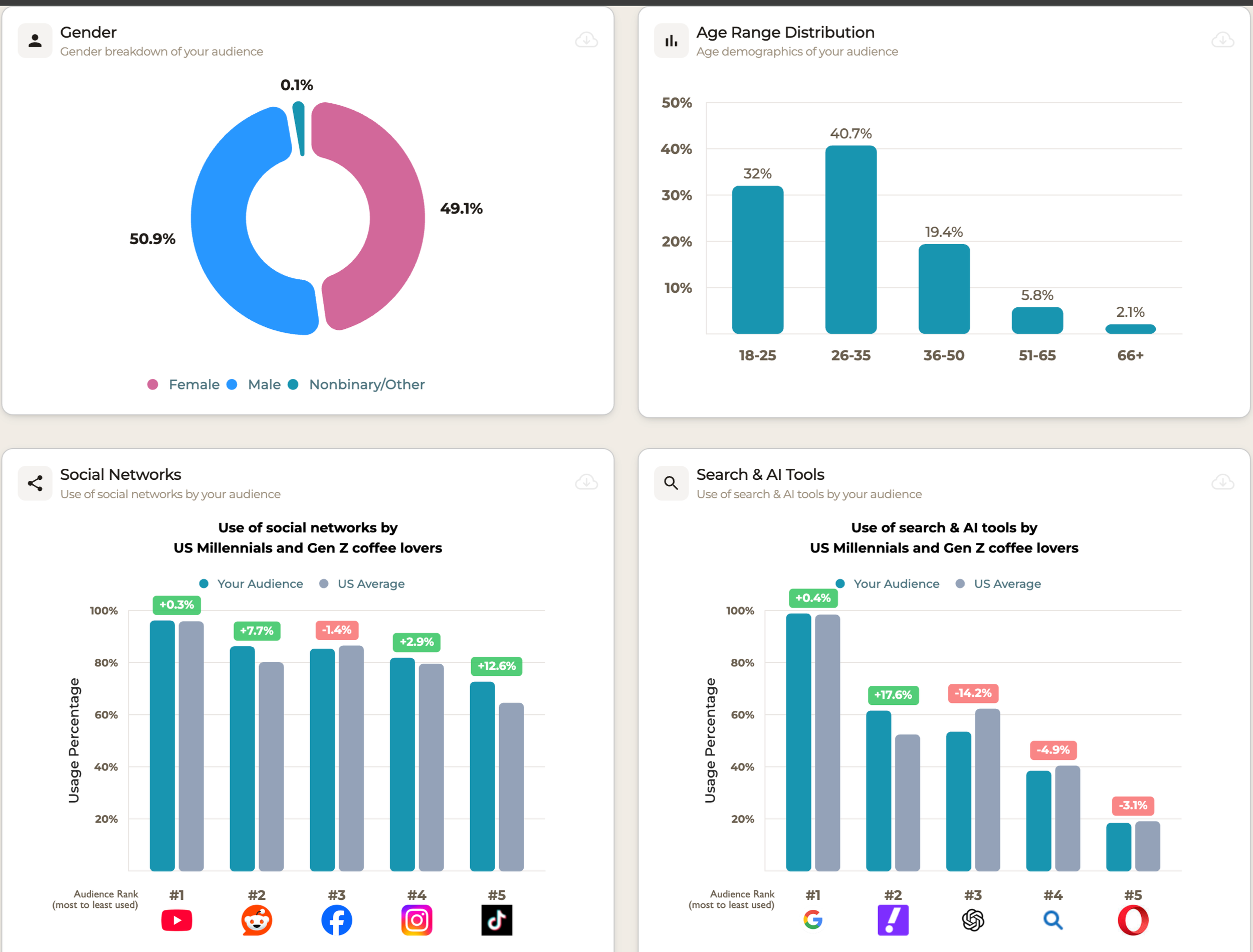
According to Henry Chapman of Infegy, an AI-powered social listening company located in Kansas City, Dunkin’ began creating a TikTok presence in 2020, as the platform began rapidly gaining popularity amongst its Gen Z target demographic, becoming the first breakfast coffee chain to get into TikTok. This move mirrored their proactive stance on Instagram, where Dunkin’ was one of the first brands to take advantage of advertising on the social media network.
In 2021, Dunkin’s TitTok presence exploded when it partnered with influencer Charli D’Amelio. This collaboration led to the creation of “The Charli,” a cold caramel brew that resulted in massive sales, and led to a line of merchandise.
“Our fans can’t get enough of the genuine love between Charli and Dunkin’, so creating the Charli x Dunkin’ merch collection felt like the perfect next step in our relationship. This collection is our way of sprinkling more Charli and Dunkin’ love onto our fans,” Kemma Kefalas, brand engagement anager at Dunkin’ told Medium in 2022. “We worked hand in hand with Charli to bring her signature look into each accessory so our fans can sip their Charli Cold Foam in style this spring.”
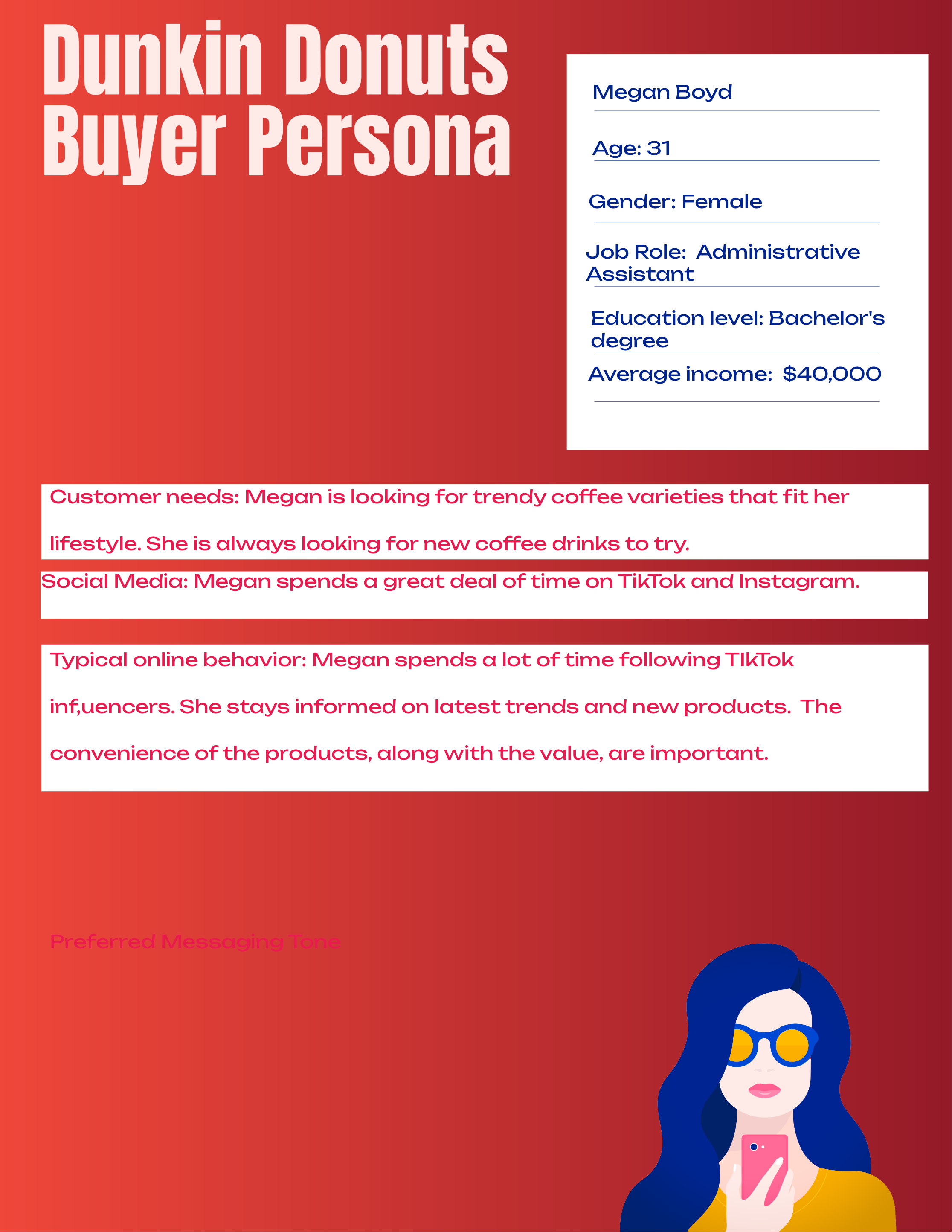
Through this information, the target audience should be women between the ages of 26 to 35 making about $40,000 per year. This group heavily follows Instagram and TikTok, which are Dunkin’s leading social media channels.
Since Dunkin’s TikTok presence has dominated the other coffee brands, it should continue providing content as fresh as its coffee.
Social Media Industry Report
The retail coffee market has become hyper-competitive, with global coffee chains competing with smaller “mom and pop” coffee shops and other corporate chains. Social media has become the latest battlefield in the coffee wars, with Facebook, TikTok and Instagram serving as launch points. Though better known for its pastries and sandwiches, Dunkin Donuts has emerged as a competitor to coffee giant Starbucks over the years due to its popular coffee. This blog will take a detailed look at the social media metrics of these brands, focusing on how Starbucks and Dunkin Donuts rank in engagement rates, content style, and audience interaction. Once key data is analyzed, a better picture of what drives these companies through their social media channels can be ascertained.
Estimated Engagement Rate Comparison
(platform: Instagram vs TikTok)
Starbucks
Instagram | █████▌ (≈0.7%)
TikTok | ████ (≈0.6%)
Dunkin’ Donuts
Instagram | ████████▌ (≈1.2%)
TikTok | █████████████ (≈2.0%)
Claude Louisville, a reporter for Medium, compared the social media strategies for both companies. “Starbucks markets an experience, a lifestyle, whereas Dunkin focuses on efficiency and familiarity” Louisville said. “This branding influences consumer loyalty and identity.”
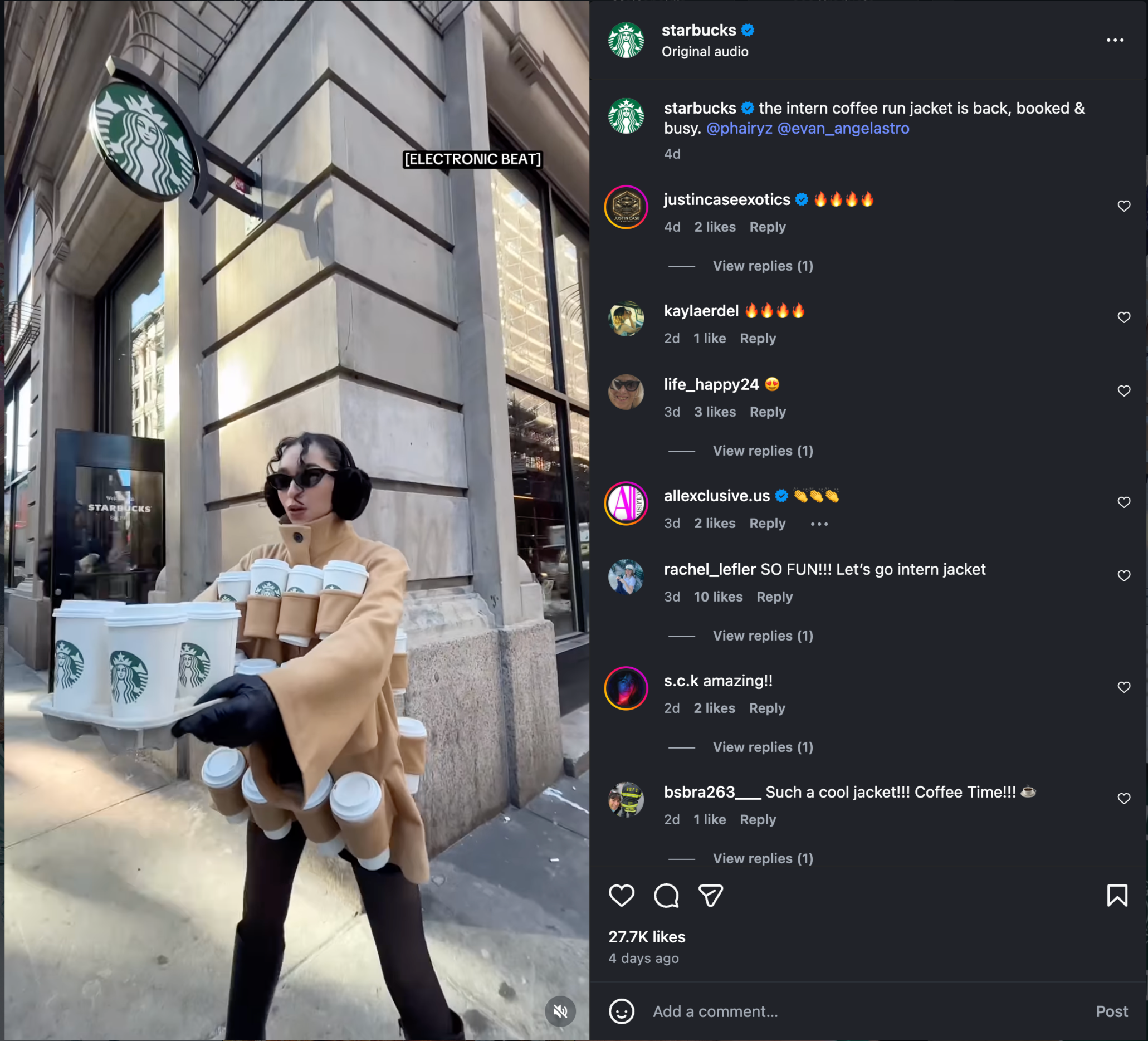
The companies’ social media footprint reflects this. Where Starbucks is seen as a status symbol, Dunkin is more representative of everyday working Americans.
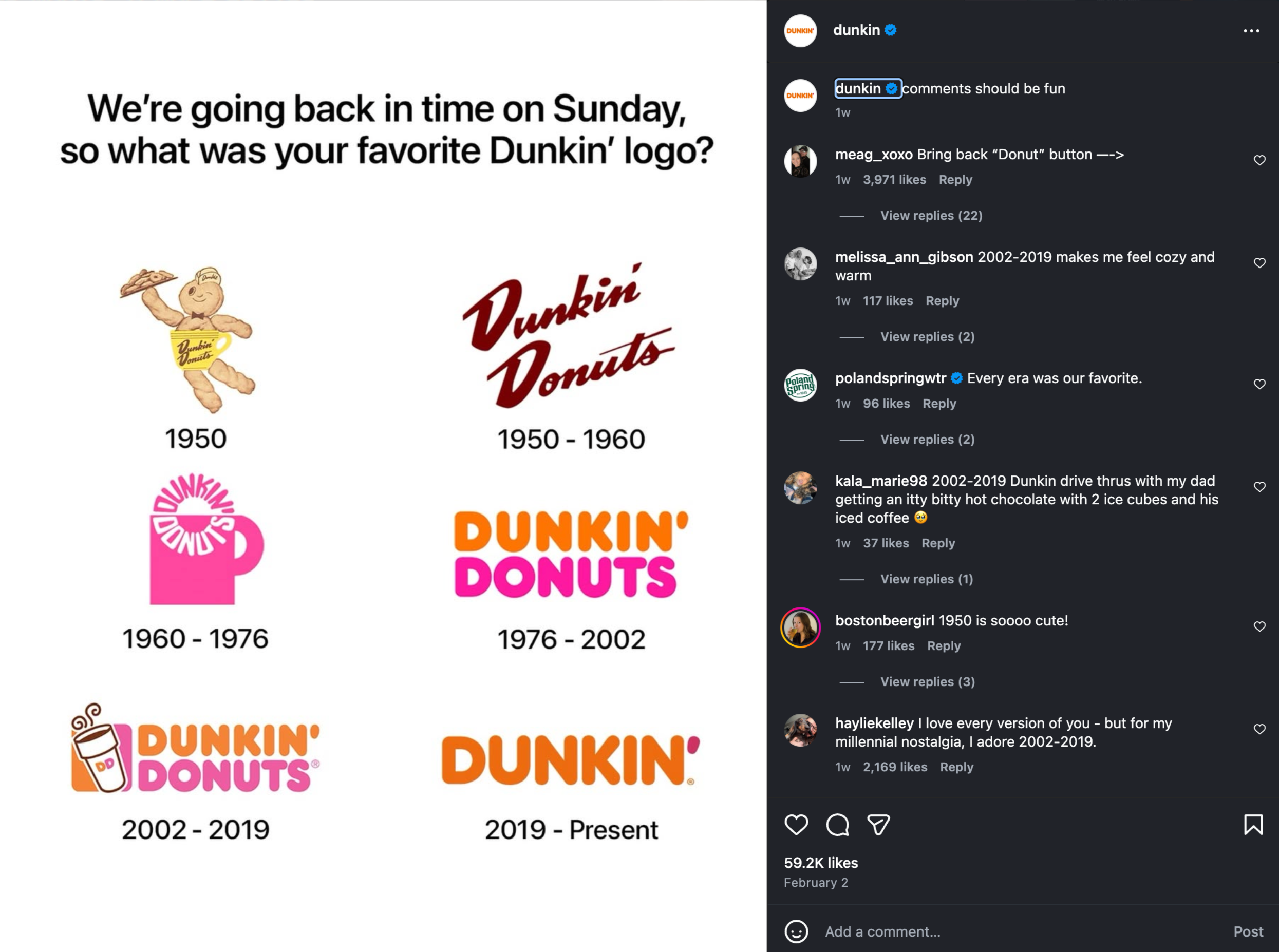
In comparing the social media performances of Starbucks and Tik Tok, Starbucks did better on Instagram than Dunkin on Instagram. According to stats gained via artificial intelligence through Chat GPT, Starbucks has a larger Instagram following than Dunkin, however, Dunkin has a wider reach rate.
On TikTok, Starbucks hasn’t performed as well. Dunkin Donuts has a TikTok following of about three million, compared to 1.7 million for Starbucks.
Dunkin has used influencers like Charli D’Amelio to promote its products on TikTok, with great success.
"This Charli thing that they have got going — that was brilliant," coffee industry expert John Gordon told Business Insider. "Starbucks has just been just very slow to react."
Even though Starbucks is a global brand that has the largest social media presence of anyone in the industry, the company could improve its reach by possibly shifting from the polished social media posts its known to a more personal approach. Focus on baristas serving their signature coffees, as well as addressing past controversies or policy changes through those voices, instead of corporate press releases. More short-form content through TikTok would be the perfect medium for addressing those challenges.
Dunkin portrays itself as community-oriented, but its social media output reflects “meme culture” at times. Dunkin should use Stanley as an example, and use the community to highlight viral moments to promote its brand. Dunkin already has a significant following on TikTok, and that is the perfect vehicle to create organic content from its franchisees.

Reviewing 2 free PR apps: Muck Rack and Prowly
It All Begins Here
As a former journalist and master’s student entering the world of public relations, I have used my fair share of tools to connect with fellow journalists and PR professionals. I have researched and scoured different platforms, including ones I have personally used in the past, and I chose two: Muck Rack and Prowly.
Let’s talk about Muck Rack first. I have used Muck Rack in the past, when I was a reporter for the Lincoln County Journal in Missouri, to contact fellow journalists and public relations professionals, and I found it very user-friendly. Muck Rack allows you to track media coverage and cultivate relationships. The platform has a built-in search engine that will pitch your campaigns to journalists interested in your client, as well as auto-updating media lists. The most popular feature is the “Who Shared My Link” tool.
“Users simply enter the URL of an article or webpage to find out how many times it was shared on social media, and which journalists and bloggers shared it,” May Zayan, a freelance blogger and marketing communications coordinator for Holland & Knight, said.
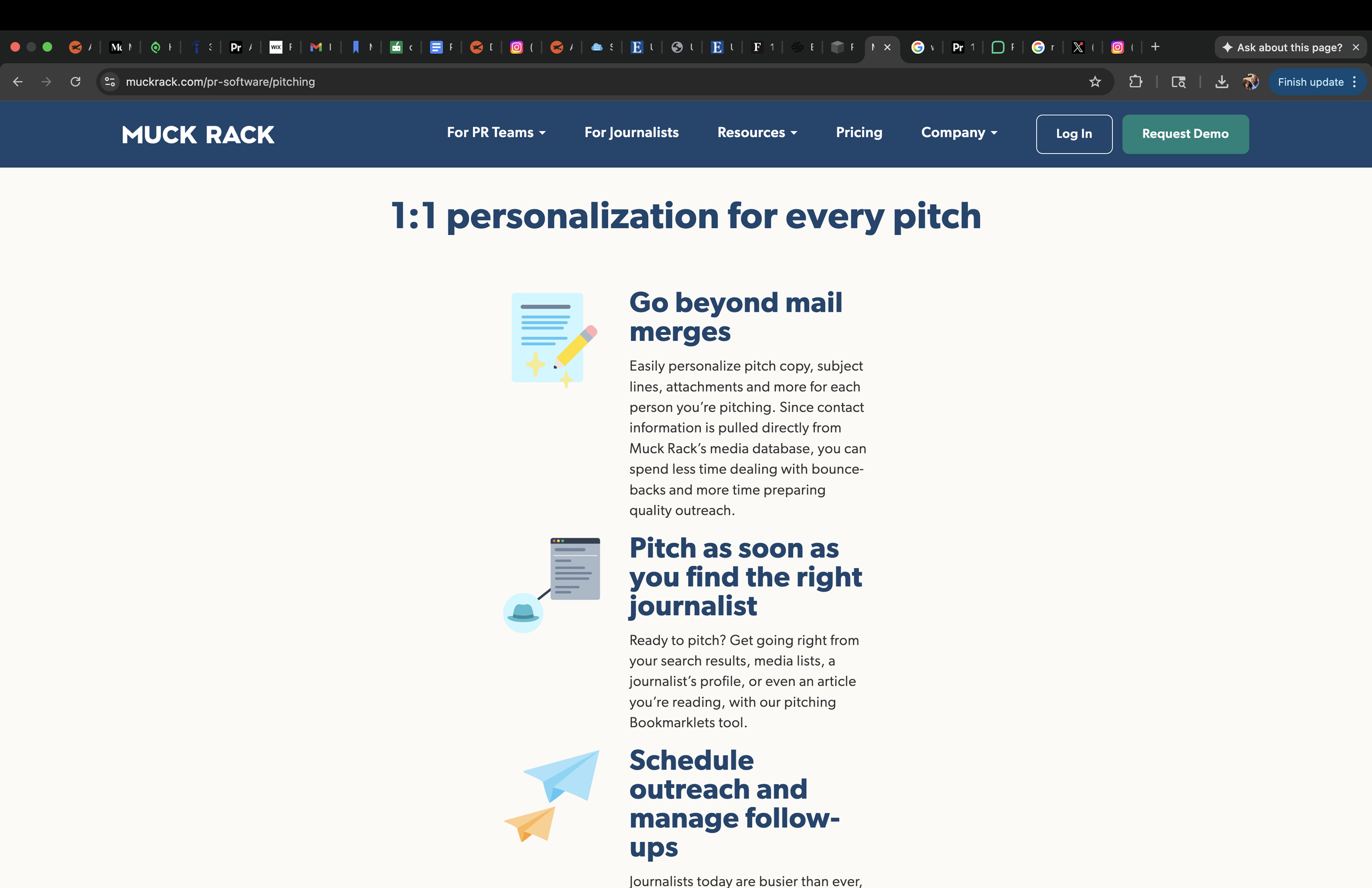
Muck Rack also updates contact lists, monitors social media posts about your client, and can also be integrated with Gmail and Microsoft Outlook. However, users have reported that, though Gmail can be integrated, Google Analytics cannot be. Also, though there is a free trial, Muck Rack is very pricey, starting at $5,000 for a basic subscription, which might not be affordable for smaller PR agencies or departments.
Prowly is another PR tool that many professionals use. Unlike Muck Rack, it integrates with Google Analytics and features a worldwide media database powered by artificial intelligence. Prowly also has a “media pitching” tool that chooses press contacts based on the contents of the press release. PR professionals have reported it is user-friendly, hosts journalist-friendly “virtual. newsrooms” and streamlines the process of distributing PR campaigns.
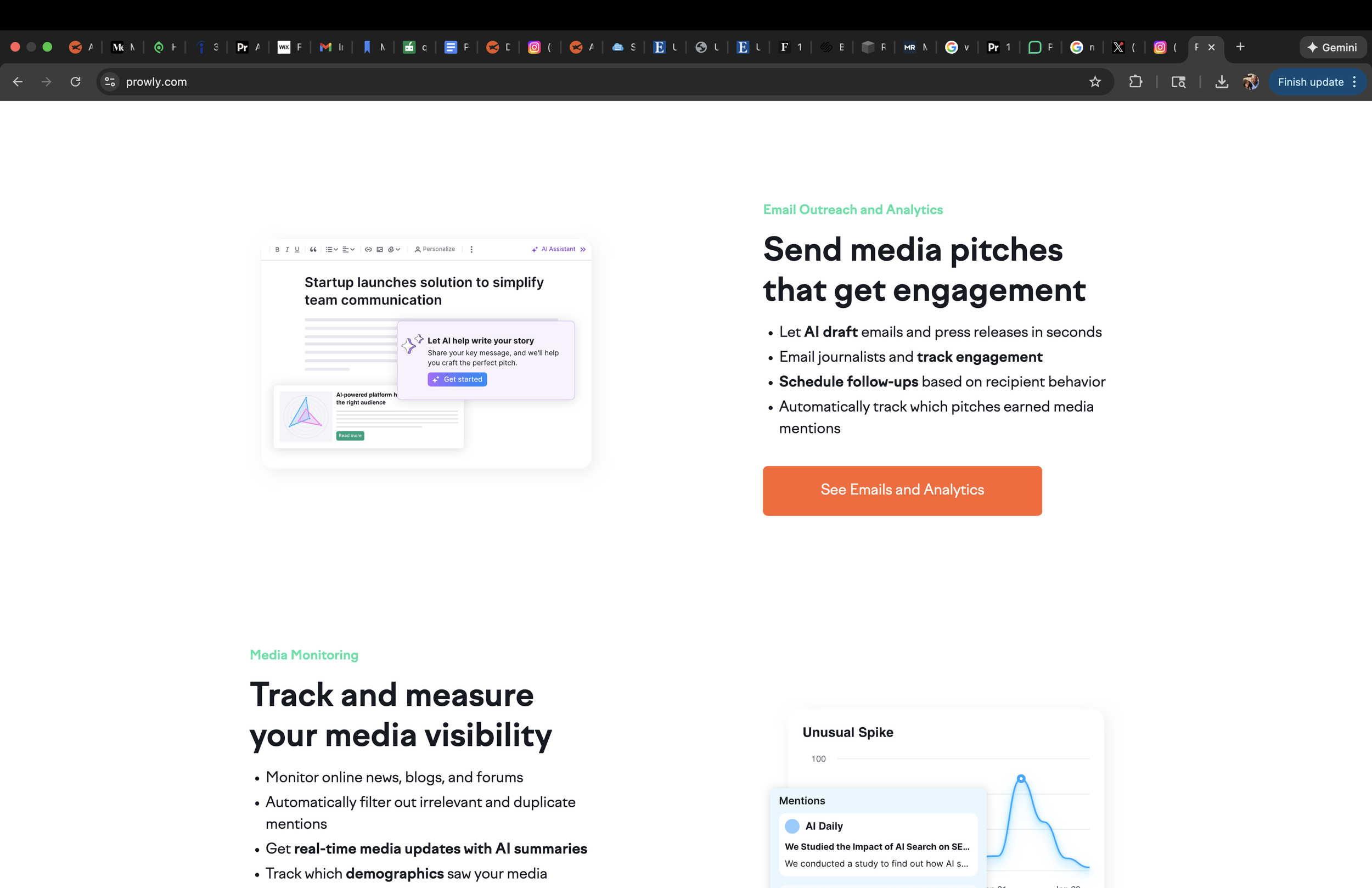
Prowly’s AI Press Release Creator module, for example, enables PR professionals to draft their document from scratch using key details like important dates, figures and quotes, or they can give an “interview” to an Open.AI-powered “journalist” to generate a detailed draft based on information gleaned from that back-and-forth conversation, according to Megan Venzin of Nonprofit Communications Report.
But Prowly content strategist Kamila Hanson said AI should always be used as a first draft, not the entire project. “You, the human being, are the one who makes the decisions,” she said.. “AI is just an assistant — nothing more and nothing less.”
However, users have reported limited filtering options with Prowly, and even though the platform is user-friendly, it can move slowly at times. It also carries a free trial, but monthly subscriptions can run around $500 for a basic package.
Both Muck Rack and Prowly are quality content management software systems for PR professionals. The size of your agency or PR department determines which option is financially prudent. While Prowly has more AI-generated tools, Muck Rack is widely trusted by PR professionals worldwide.